Visualizzazione post con etichetta popular culture. Mostra tutti i post

venerdì 19 dicembre 2014

La barbabietola: FINE – The beet: THE END

Barbabietola
Giunge al suo termine il percorso di approfondimento sulla barbabietola. Abbiamo visto come questa pianta, caratterizzata dalla grande radice ricca di zuccheri, abbia una grande varietà di specie nate dall'ibridazione vegetale, dedite a diversi utilizzi.
Non si hanno testimonianze sulla barbabietola di epoca pre-agricola, in quanto nata dalla selezione genetica della rapa. La barbabietola fa la sua prima apparizione storica nell'antica Grecia, dove è presente in alcuni miti su Afrodite e Apollo. Si diffonde anche nel resto d'Europa, rientrando nella cultura popolare di vari paesi sia nel gergo che nella cucina. La grande diffusione della barbabietola si ha poi, nel XIX secolo, con la scoperta (ad opera di diversi personaggi) della grande quantità di saccarosio presente nella radice e con la diffusione della pianta per la produzione di zucchero.
Oggi la barbabietola rimane un ortaggio con poca risonanza nella cultura di massa rispetto ad altri; concettualmente è abbastanza legata al nonsenso; se presente nella musica o nei proverbi, ha l'accezione di qualcosa di completamente casuale, mentre nella narrativa richiama all'ignoto. Anche il patrimonio iconografico intorno alla cosa lascia molto a desiderare, nell'arte è ovviamente soggetto di nature morte, ma in pochissimi casi. Nonostante ciò, la barbabietola possiede una buona potenzialità espressiva, limitata nella recezione dalla sua non diffusione.
L'ultimo importante legame con barbabietola è quello con il benessere; la barbabietola è un alimento molto salutare (ha persino proprietà antitumorali); ciò ha alimentato una serie di credenze, più o meno fondate; ad esempio le erano attribuite proprietà afrodisiache, probabilmente suggerite dal colore vermiglio caratteristico.

We are on the close the course of study on the beet. We have seen how this plant, characterized by the great root rich in sugar, has a great variety of species, has a large variety of species born from plants hybridization, dedicated to different uses.
There is no documentation on the beet in the pre-agricultural age, as it's born by the genetic selection of turnip. The beet makes its first historical appearance in ancient Greece, where it is present in some myths about Aphrodite and Apollo. It spreads throughout the rest of Europe, introducing itself into the popular culture of various countries, both in the jargon and in the cuisine
The widespread use of beet is then, in the nineteenth century, with the discovery (by different characters) of the large amount of sucrose present in the root and with the spread of the plant for the production of sugar. Today the beet is a vegetable not very common in mass culture as others; conceptually it is quite linked to nonsense; if present in the music or in proverbs, has the meaning of something completely random, while in the narrative recalls the unknown. Even the iconographic heritage around the thing leaves much to be desired; in the art is of course subject of still lifes, but in very few cases. Nevertheless, the beet has good expressive potential, limited by its poor diffusion. The last important link with beet is the one with the well-being; beet is a very healthy food (it has even anti-cancer properties); this has fueled a set of beliefs, more or less true; for example, aphrodisiac properties were attributed to it, probably suggested by the characteristic vermilion color.


domenica 19 ottobre 2014

La geografia della barbabietola: ricette popolari - The geography of the beet: popular recipes


Il boršč -  The Borscht

http://www.promoturpd.org/wp-content/uploads/2012/10/borsc1.png
Il boršč (борщ) è una minestra tipica dei paesi dell'est Europa di origini ucraine; il nome varia dipendentemente dalla nazione, come anche le ricette. Solitamente la barbabietola costituisce l'ingrediente principale, ma a volte può  essere anche il pomodoro.

The Borscht is a soup tipical of the east Europe original from Ukraine; the name changes from the country, as the recipes. Usually the beet composes the main ingredient, but sometimes it can be the tomato.


Miracle drink


Beet-Carrot-Apple Juice
http://www.foodnetwork.com/recipes/food-network-kitchens/beet-carrot-apple-juice.html
Il Miracle drink ha questo soprannome per i grandi benefici che porta all'organismo, ma è semplicemente succo di barbabietola, mela e carota. Il succo venne introdotto da un erborista cinese per la cura di malattie; alcuni sostengono che sia utile per il trattamento del cancro.

Miracle drink has this surname thanks to the great beneficts that it goal to the organism, but it's simply beet, apple and carrot juice. The juice was introducted bu a Chinese herborist for cure some diseases; someone says it's usefull for the treat of cancer.


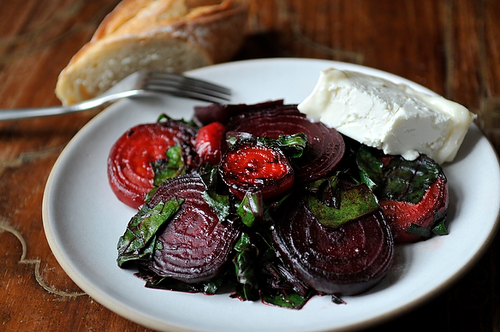
French "Peasant" Beets

French "Peasant" Beets
http://food52.com/blog/5132-dinner-tonight-french-peasant-beets-lazy-mary-s-lemon-tart
Ricetta americana che prende ispirazione dalla Francia, come dice il nome, French "Peasant" Beets (barbabietole del contadino francese); la ricetta utilizza sia le radici che le foglie delle barbabietole, condite con vino bianco e formaggio di capra. 

American recipe, that takes inspiration from France, as the name says, French "Peasant" Beets; the recipe uses both roots and leaves of beets, seasoned with white wine and goat cheese.


Aliter Betas Elixas


Beets with mustard
http://redsbragbook.livejournal.com/8022.html
Ricetta molto antica, che risale all'antica Roma. Consiste in barbabietole bollite con mostarda; le barbabietole vengono bollite, pelate e tagliate, poi vengono servite coperte con una salsa fatta con la mostarda, olio d'oliva e aceto.

An acient recipe, that goes back to the acient Rome. It consist in boiled beets with mostard; the beets are boiled, peeled and sliced, then they're served covered with a sauce made with the mustard, olive oil, and vinegar.

martedì 14 ottobre 2014

Le barbabietole e le forbici nella musica - The beets and the scissors in the music

Canzoni in cui compaiono le barbabietole: - Songs where the beets appear:


Canzone popolare in dialetto milanese:  La bella la va al fosso, ravanei remulass barbabietole spinass (Mentre risciaqua i panni, alla bella cade l'anello nel torrente; alza gli occhi e vede un pescatore, a cui chiede di ripescare l'anello. Lui lo ripesca in cambio di un bacio, confidando nel silenzio delle stelle e della luna. Ma il papà della bella li scopre, la bella chiede perdono e la storia finisce con un bacio d'amore.)

Popular song in the dialect of Milan: La bella la va al fosso, ravanei remulass barbabietole spinass (While she's washing the shoes, the beautiiful drop the ring in the torrent; she looks up and sees a saylor, she asks him to picks the ring back. He picks it in exchange of a kiss, hoping in the silence of the stars and of the moon. But the beautiful's dad discovers them, the beautiful asks him forgiveness and the story ends with a love kiss.)


La canzone di una associazione no-profit, Sesame Street: Sugar Beets 
A song from a no-profit organization, Sesame Street: Sugar Beets


Canzone di Laura Stevenson & The Cans: Beets Untitled 
Song by Laura Stevenson & The Cans: Beets Untitled


Canzoni in cui compaiono le forbici: - Songs where the scissors appear:


Ode a Pippa Bacca, artista milanese stuprata e assassinata, una canzone di pace da Nadia Impalà: Correndo con le forbici in mano
Ode to Pippa Bacca, a Milanese artist who was raped and murdered, a song of peace by Nadia Impalà: Correndo con le forbici in mano


Canzone del gruppo Il Triangolo: Le forbici 
Song from the group Il Triangolo: Le forbici


Canzone di Slipknot: Scissors
Song by Slipknot: Scissors


Canzone di Bear Lake: Scissors
Song by Bear Lake: Scissors

venerdì 10 ottobre 2014

Detti sulle forbici - Proverbs on scissors

http://www.ilgiorno.it/cremona/cronaca/2014/05/09/1063221/images/2689161-forbici.jpg

Alcuni detti che hanno come protagoniste le forbici:


"Colpo di forbici ognun due." (La maldicenza e la calunnia fanno anche più male che non si vorrebbe) -Proverbio Toscano

"Ci tene lu lupu pe' cumpare, porta le forfici sotta a llu mantieddhru." (Chi ha il lupo per amico, tiene un paio di forbici sotto il mantello) -Proverbio Leccese

"Gli stupidi e le forbici devono essere maneggiati con cura." -Proverbio giapponese

"Forbici per una lingua cattiva." -Proverbio portoghese

"Per le lingue cattive, forbici." -Proverbio spagnolo

"Le forbici pesanti fanno il sarto con la bocca storta." -Proverbio danese


Some sayings about scissors:


"Two shots any hit of scissors." (Slander and libel are even more evil than you would like) -Proverb from Toscana


giovedì 9 ottobre 2014

Detti sulle barbabietole - Proverbs on beets

Giocattolo artistico Devil beet - Artistic toy Devil beet


Alcuni detti e citazioni che hanno come protagoniste le barbabietole:


"Una storia che inizia con una barbabietola finirà con il diavolo" -Proverbio ucraino

"Vendere barbabietole come limoni." -Proverbio olandese

"Respira correttamente. Sii curioso. E mangia le tue barbabietole." -Cit. Tom Robbins 

"Lei disse, Mi ami? E io risposi, Amo il modo in cui le barbabietole rendono la mia pipì rosa." -Cit. Jarod Kintz


Some sayings and quotes about beets:


"A story that begins with a beet will end with the devil" -Ukraine proverb

"Sell beets as lemons." -Dutch proverb

"Breath properly. Stay curious. And eat your beets." -Quote. Tom Robbins 

"She said, Do you love me? And I replied, I like the way beets turn my pee pink." -Quote. Jarod Kintz

Le barbabietole nei miti antichi: Afrodite - The beets in the acient myths: Aphrodite

Venere di Urbino, Tiziano - Venus of Ubino, Tiziano

Nella mitologia greca, anche Afrodite, la dea della bellezza, è collegata alle barbabietole. Il suo segreto di bellezza, si dice, fosse la barbabietola, che manteneva viva la sua bellezza e le concedeva i suoi poteri di seduzione, grazie alle capacità afrodisiache.
Anche nelle culture celtiche si attribuivano capacità straordinarie all'ortaggio, la leggenda voleva che quando un uomo e una donna mangiano la stessa barbabietola, si innamorino l'un l'altra.

In the greek mythology, even Aphrodite, the godness of beauty, is linked with the beets. They say that she's secret of beauty was the beet, that maintained she's beauty and garanted her she's seduction power, thanks to the aphrodisiac capacities.
Also into the celtic cultures, some extraordinary proprietes were attributed to the vegetable, the legend said that when a man and a women eat to the same beet, they fall in love to each other.

Fonte-source: http://www.godchecker.com/offerings/index.php?article-beetroot-myths

Le barbabietole nei miti antichi: Apollo- The beets in the acient myths: Apollo

Apollo e Ciparisso, Claude-Marie Dubuffe - Apollo and Cyparissus, Claude-Marie Dubuffe 

Secondo gli antichi greci e romani, le barbabietole valgono il loro peso in argento. Nella mitologia greca, venivano offerte delle barbabietole al dio Apollo, il dio del sole, della luce, della musica, ma anche della medicina e del benessere; infatti alle barbabietole venivano attribuite delle proprietà afrodisiache e curative.

According to the acient greeks and romans, the beets worth their weight in silver. In the greek mythology, beets were offered to the Apollo, the god of sun, light, music, but also of medic and health; infact, aphrodisiac and curative proprieties were attributed to beets.

Fonte-source: http://www.optimalhealthsystems.com/shownews.asp?id=161 

domenica 5 ottobre 2014

La parola "forbici" nelle lingue del mondo - The word "scissor" in the languages of the world


Cose per mangiare: le forbici - Things for eat: the scissors

 italiano/italian
 inglese/english
 tedesco/german
 francese/french
 spagnolo/spanish
 cinese/chinese
 剪刀 (Jiǎndāo)
 coreano/corean
 가위 (gawi)
 giapponese/japanese
 はさみ (hasami)
 greco/greek
 ψαλίδι (psalídi)
 arabo/arabic
 مقص (Noun m)
 russo/russian
 ножницы (nozhnitsy)
 turco/turkish
 latino/latin

Nei dialetti italiani - In italian dialects:

 piemontese
 tisòire, tesòire
 milanese
 foresettée 
 sardo
 ferros, ferrus
 siciliano
 scizzora
 valdostano
 forcette
 abruzzese
 furce
 veneto
 forbese
 pugliese
 fuorce
 napoletano
 fuorfece
 ligure
 tesùire
 modenese
 forbes

venerdì 3 ottobre 2014

La parola "Barbabietola" nelle lingue del mondo - The word "Beet" in the languages of the world


Cose da mangiare: le barbabietole - Things to eat: the beetroots


 italiano/italian
 inglese/english
 tedesco/german
 francese/french
 spagnolo/spanish
 cinese/chinese
 甜菜 (Tiáncài)
 coreano/corean
 사탕 무우 (satang muu)
 giapponese/japanese
 ビートの根 (Bīto no ne)
 greco/greek
 τεύτλων (téf̱tlo̱n)
 arabo/arabic
 شمندر (sẖmndr)
 russo/russian
 свеклы (svekly)
 turco/turkish
 latino/latin


Nei dialetti italiani - In italian dialects:

 piemontese
 biarava
 lombardo
 raabieda
 calabrese
 prestunaca
 ligure
 gerava
 triestino
 erbeta